Concept Art for Games That Doesn't Exist
| 5 min. read

I have a folder named "Concept Art for Games That Don't Exist" in my computer's "My Pictures" folder.
It weighs 842 megabytes.
That folder is heavy for two reasons. First, it's because Photoshop's compression algorithm is about as stable, efficient and consistent as the average politician. Second, it's because I make cover art for every single idea I have in mind.
When you get an idea for something - be it a video game, a screenplay, a short story, whatever - it never comes fully formed. It's but a flash of inspiration. A cool character concept. A dramatic scene. An innovative gameplay mechanic. A piece of dialogue. Inspiration is a messy haze of ideas and concepts.
Different creatives have different methods to pave their way out of this haze and into something coherent. Some write documents or outlines, others have their creative friends come over and brainstorm ideas with them, and some - like me - just improvise their way through it.
Now, branding, cover art, capsule art, key art, what have you - is usually something you do after you have your shit figured out. Composition, copywriting, fonts, titles, art styles, message, theme, style: there's a lot to think about. But that's often the first thing I do, even if I don't have a fully formed logline, pitch, or hook. Very rarely do I spend more than an hour on each poster; the point is to FAFO.
My primary excuse for doing this is that I enjoy graphic design. Which, y'know, cool.
But, if you think about it, artwork reveals a lot of character, and it informs the audience - and myself - about what they're getting into. I suppose it's similar to how some writers consider their "dream casting" as they write dialogue.
And yeah, that's part of why I find this field so appealing, especially when trying to organize random thoughts into a single creation. For instance, the color palette and art style for Venus Looks for Jupiter is a direct result of its then-fake branding (see cover image).
This weird obsession with cover art also adds another dimension of legitimacy and investment to my ideas. What I'm doing isn't just writing words on pages or commands in an IDE. It's a legitimate piece of media that's going to be released to the world.
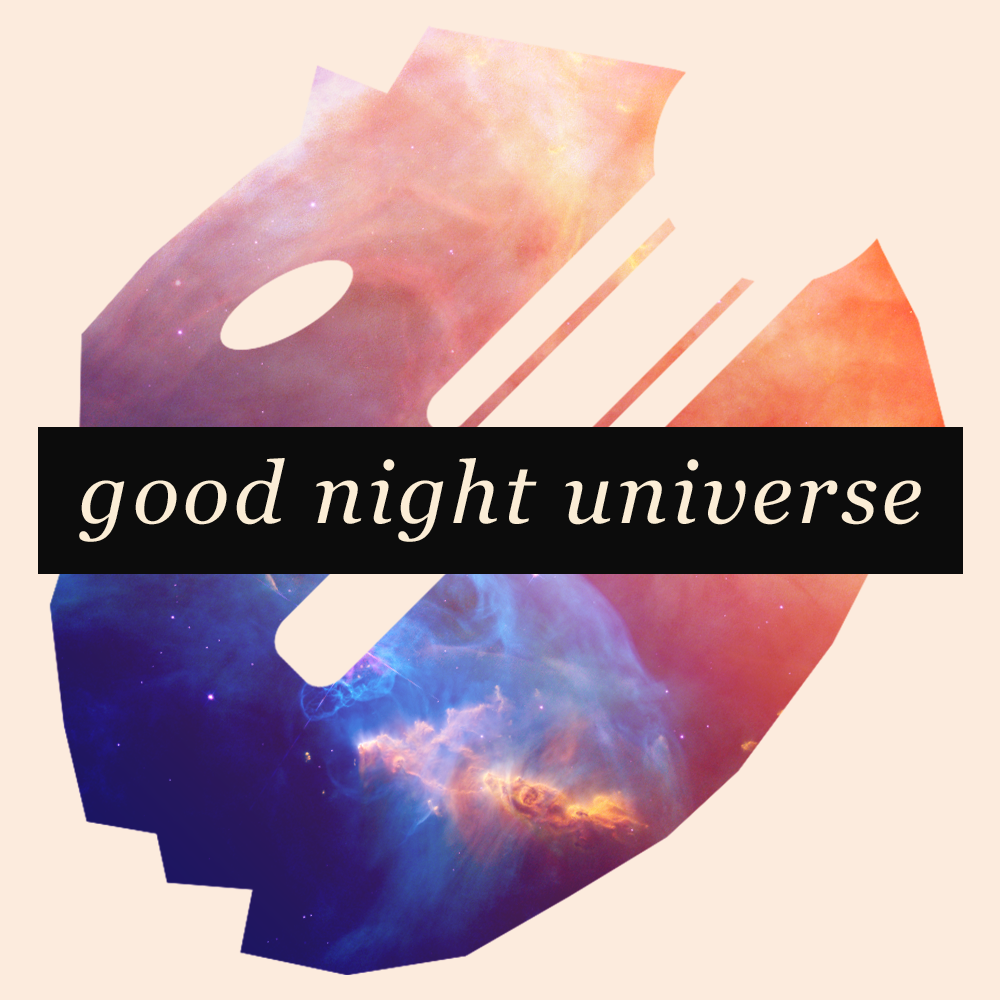
GOOD NIGHT UNIVERSE: A space ranger arrives at a dying galaxy. Gameplay would have consisted of traveling around the map, completing quests, meeting characters, uncovering lore, and trying to scavange what you can to survive. Basically Sunless Skies before I knew Sunless Skies existed.
Of course, many of these flashes of inspiration aren't good enough to be developed further. They make the gears in my head spin for long enough for me to create some sort of logo or cover art, but they eventually fade away. I call it "The Thing."
The Thing wasn't suitable for a full release.
The Thing was a work in a genre I am no longer passionate about.
The Thing led me toa corner I can't get out of and can't be arsed to rewrite.
Hell, The Thing may simply be out of my budget and scope.
You might say that The Thing is just ADD, which I'm willing to accept. I was never diagnosed with it, but I have my suspicions. I understand that it's somewhat hereditary; my father has ADD, so the smoking gun is there. In my infinite wisdom I tried taking a Ritalin pill in high school and to its credit, it did focus me up a bit. Problem is, I was focused on anything but the task at hand. So that was fun.
Of course, there are rare occasions I get a Jimmy Neutron Brain Blast and come up with a Thing I'm genuinely passionate about that also has a reasonable scope and can sustain a full release all on its own. This happened with One Tank in May and Venus.
I find these occassions happen once or twice a year, often after a long period of ennui where I churn through my never-ending movie, game and book backlog. I also say "yes" to basically everything I can, as long as it doesn't hurt anyone but me. Ideas come from remixing things you've seen in a new way, after all - and speedrunning through media does make neurons connect faster in my head - even if it's out of sheer desperation or boredom.
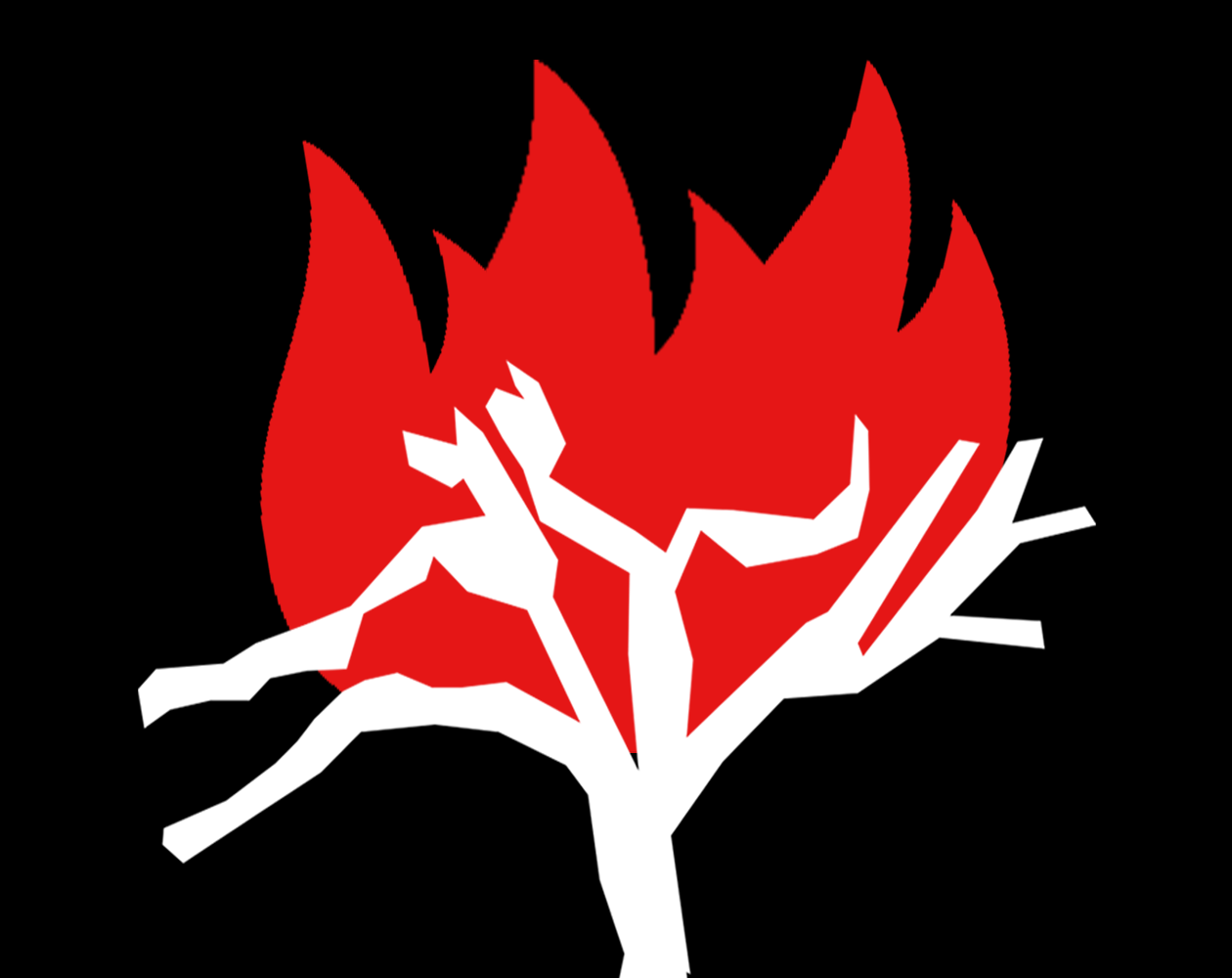
The first "concept art" for What We Had To Do - the burning tree - which made it into the final game.
Most often, The Thing is just a piece of a larger puzzle that I have yet to fully solve. It goes into my Google Keep and Obsidian archives with all the other Things, and the rough cover art I designed for it is kept in that folder under an inscrutable file name.
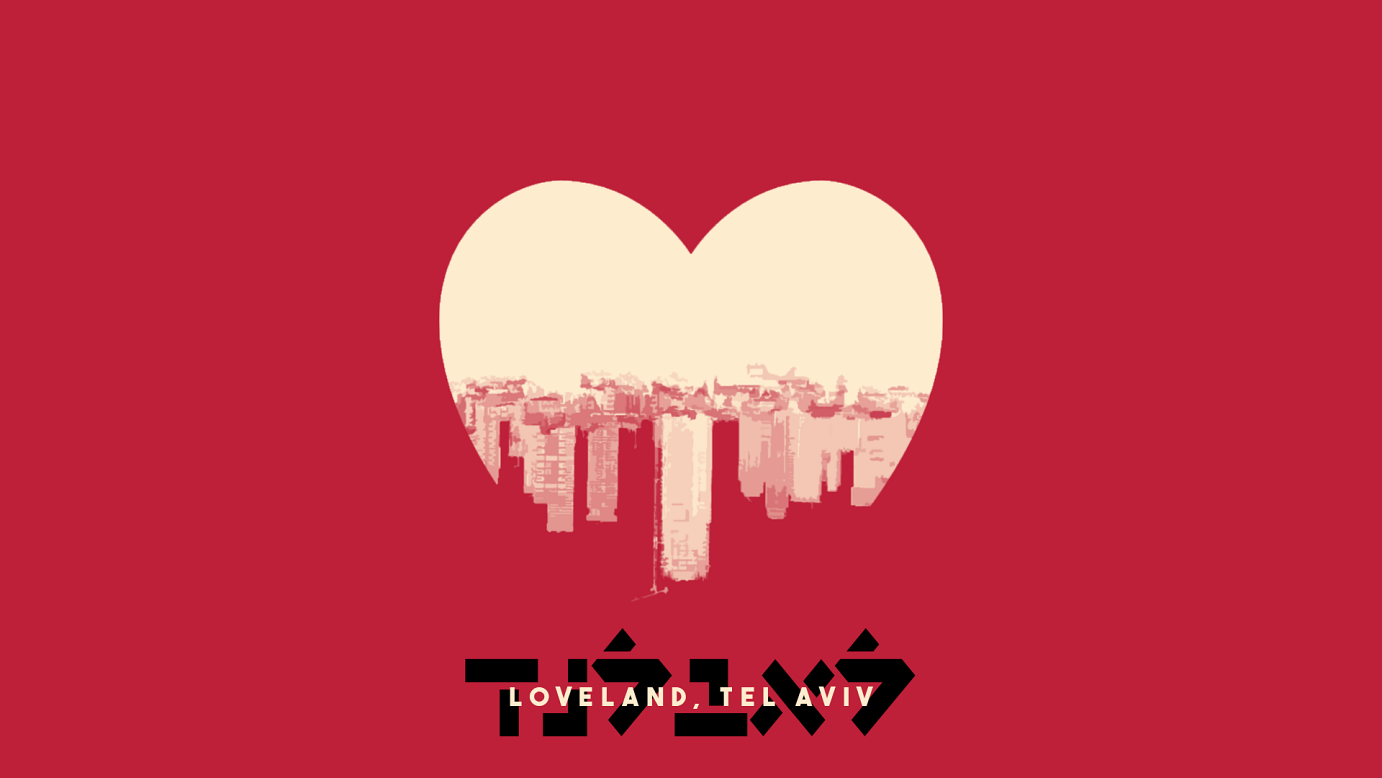
LOVELAND, TLV: A magical-realist murder mystery set in a fictional neighborhood of Tel Aviv, Israel. That's all I remember outside of the cover art, which I genuinely like to this day.
Every few months or so I look through that concept art folder and review the casualties of my short attention span. I scan through and see a title card for a short story. I scroll down and find a poster for a point and click adventure I wrote a short design doc for. I delve deeper; I stumble upon random quotes and narrative concepts I jotted down months ago. Some of them are good. Many of them were good in the heat of the moment.
I sleep on it, and eventually - a flash of inspiration. Another scene. Another theme. Another concept. I open Photoshop, and the cycle begins anew.